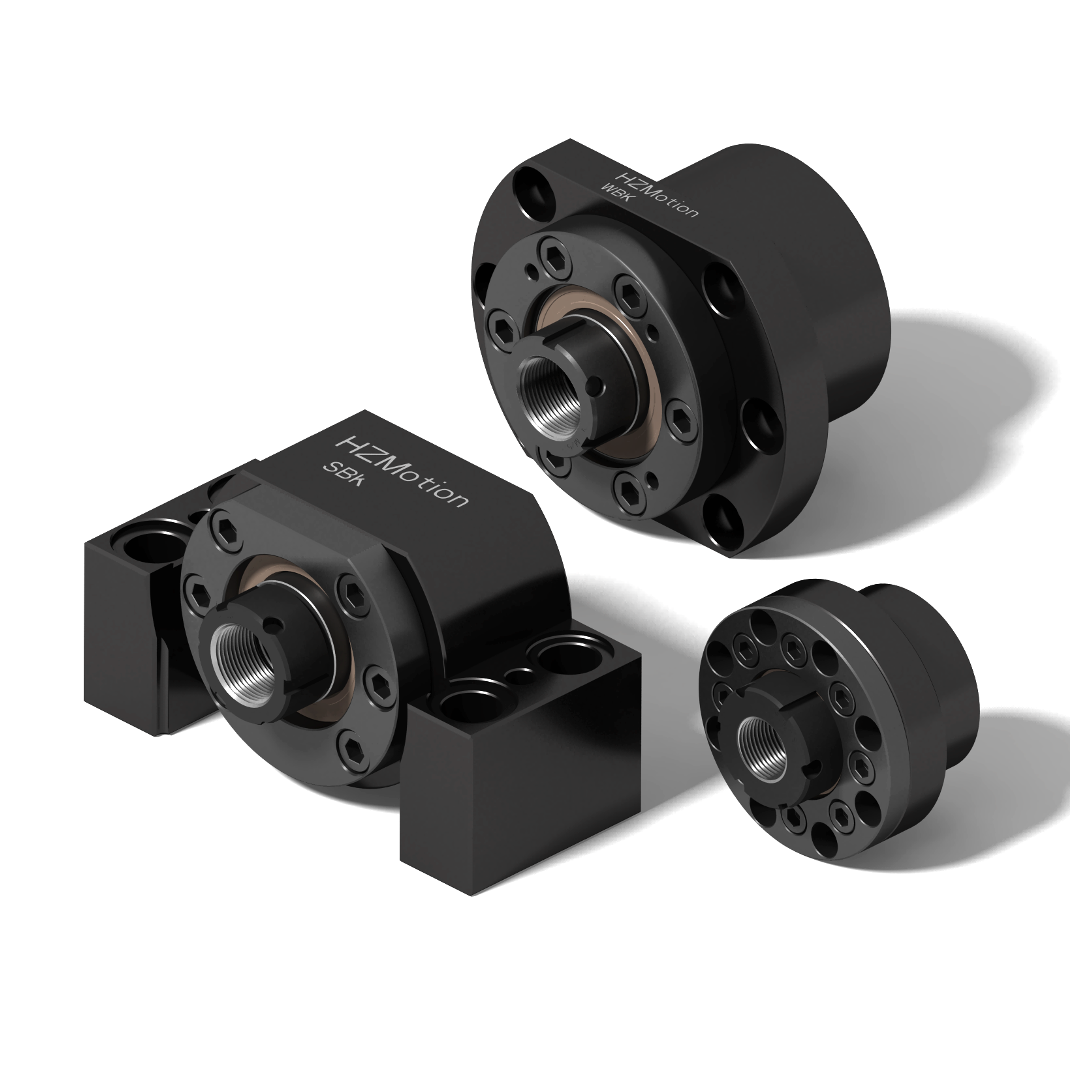
Heavy Duty Support Units
The heavy-duty fixed end support units are designed for heavy cutting machine tools and high-load applications. This product line offers a variety of bearing precision grade options and surface rust-prevention treatments. You can select the most suitable product and configuration based on your specific application scenario.
Features
- Bearing Configuration: Options include P4-grade imported bearings, P4-grade domestic bearings, and P5-grade domestic bearings, with various bearing pairing configurations available.
- Mounting Method: Typically double-end fixed tension mounting method.
- Surface treatment: The bearing housing is black-oxide treated by default for rust prevention, with other surface treatment options available.
- The assembly is factory-adjusted for bearing preload and pre-filled with lubricant.
The HZMotion heavy-duty fixed-end support unit product line includes the following series:
| Model | Illustration | Mating Surface | Applicable Ballscrew | Axial Load Capacity | |
|---|---|---|---|---|---|
| SBK SBK-U | 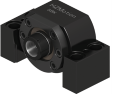 | 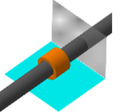 | Parallel with lead screw axial direction. | Shaft Dia: 25-40mm Screw Dia: 30-63mm | |
| WBK | 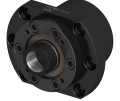 |  | Perpendicular with lead screw axial direction. | Shaft Dia: 17-40mm Screw Dia: 20-50mm | |
| FBSA | 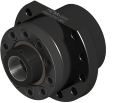 | Shaft Dia: 20-60mm Screw Dia: 25-80mm | |||
| MBK | 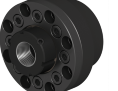 | Shaft Dia: 15-20mm Screw Dia: 18-30mm | |||
HZMotion heavy-duty fixed-side product line offers the following bearing configuration options:
| Bearing Code | Equipped Bearing Type | Bearing Grade | Preload | Origin | Applicable Ballscrew Grade |
|---|---|---|---|---|---|
| [ ] | Angular Contact Thrust Ball Bearing | P4 | Heavy | JP | C1-C5 |
| C4 | Angular Contact Thrust Ball Bearing | P4 | Heavy | CN | C1-C5 |
| C5 | Angular Contact Thrust Ball Bearing | P5 | Heavy | CN | C3-C7 |
Note 1: The equipped bearing grade can be identified from the suffix in the specific part number.
Applications
Heavy cutting machine tools, heavy-load application scenarios.
Heavy Duty Support Units Specific Models
Technical Manual PDF Download
Search Product List
Heavy Duty Support Units
FAQ
Square-structured ball screw support units are suitable for various installation space configurations and are especially ideal for applications where operation passes through shoulder spaces. Among square bearing housings, types such as AK, BK, and LK are classified as light-duty and are typically used as fixed ends in automation equipment or machinery with light loads. Types like AF, BF, and EF are commonly used as support ends. BK-TAC, EK-TAC, SBK, and SBK-U are classified as heavy-duty and are used as fixed ends in machine tools or heavy-load applications.
Lubrication, locking condition and installation status should be checked according to actual working conditions to avoid abnormal loads affecting service life.
Round-structured ball screw support units are typically used in combination with A-type, B-type, H-type, or L-type motor brackets. Light-duty support units are usually equipped with 30° angular contact ball bearings, while heavy-duty support units are fitted with 60° angular contact thrust ball bearings specifically designed for ball screws. Support-end support units are generally equipped with deep groove ball bearings. Heavy-duty support units are often used in a double-ended tension configuration.
Angle A is 30°, angle B is 40°, and angle C is 15°. There is no difference in dimensional usage among them. Although there are slight differences in rated load capacity and maximum operating speed, these do not affect usage. The main difference is that rigidity of the assembled bearing increases significantly with the angle, which has a notable impact on the precision of the bearing housing within the entire ball screw transmission system.
The flange outer diameter of a round type support unit is a non-mating surface and is not strictly controlled for geometric tolerance; it only needs to meet the national standard tolerance values. The root of the flange, which is the outer cylindrical surface of the bearing housing, is the mounting mating surface and is subject to strict geometric tolerance requirements.
Under normal use, the support unit is not easily damaged. For support units assembled with standard ball screws, the support unit’s load capacity matches that of the installed ball screw. The actual service life is closely related to the operating environment, load magnitude, lubrication and maintenance, and usage frequency.
HZMotion mainly uses medium carbon steel for support units, with only the SBK type bearing housing made of ductile cast iron. The mechanical properties of these two materials are very similar, so there is no difference on performance.
Temperature affects the accuracy of the bearing.
We add an appropriate amount of grease to the bearings before shipment. The grease replenishment interval varies depending on the operating conditions and environment. Generally, it is recommended to perform maintenance and inspection once every quarter.